Guide


Your business has cash in its bank account, but you also have salaries, operating expenses, and supplier payments coming up. You might even have an outstanding loan or rely on credit facilities to cover short-term expenses.
Following the recent increase in interest rates in Egypt, what’s the better move? Should you keep your cash available, repay part of your debt, or take advantage of higher returns on your available funds?
In October 2026, the Central Bank of Egypt (CBE) raised its key interest rates by 100 basis points, or one percentage point. This decision could affect borrowing costs for businesses and the returns offered on certain deposits and savings products.
The right decision depends on your financing costs, upcoming obligations, and how much cash your business will need in the coming months.
Key Takeaways
- A 1% interest rate hike means an increase of one percentage point, not a 1% relative increase in the previous rate.
- Following the October 29, 2026 decision, the CBE’s overnight deposit rate reached 20%, while its overnight lending rate rose to 21%.
- Variable-rate business loans may become more expensive, depending on their terms and repricing dates.
- Some variable-rate savings certificates may offer higher returns, but not all are available to businesses.
- Before investing available cash or repaying debt, businesses should account for payroll, operating costs, and upcoming obligations.
What Happened in the Central Bank of Egypt’s Latest Interest Rate Decision?
On October 29, 2026, the Central Bank of Egypt’s Monetary Policy Committee (MPC) decided to raise its key interest rates by 100 basis points, equivalent to one percentage point.
As a result, the overnight deposit rate increased from 19% to 20%, while the overnight lending rate rose from 20% to 21%.
| Interest Rate | Before the Decision | After the Decision |
| Overnight deposit rate | 19% | 20% |
| Overnight lending rate | 20% | 21% |
| Main operation rate | 19.5% | 20.5% |
| Discount rate | 19.5% | 20.5% |
It’s important to understand the difference between the Central Bank of Egypt interest rate and the rates that commercial banks offer their customers.
The CBE sets key policy rates that influence borrowing and saving costs across the economy. However, commercial banks determine their own loan and deposit rates based on the product, funding costs, associated risks, and contractual terms.
In other words, a 21% CBE overnight lending rate doesn’t mean every business will borrow from its bank at 21%.
Why Did the Central Bank of Egypt Raise Interest Rates by 1%?
The decision came amid economic pressures and external uncertainty, including higher global energy and commodity prices, regional tensions, and an uncertain global economic outlook.
Although Egypt’s annual headline inflation declined to 13.9% in September 2026, monthly inflation increased compared to August.
The CBE raised interest rates to help limit potential inflationary pressures, support the downward trend in inflation, and maintain price stability. Simply put, higher interest rates generally make borrowing more expensive while potentially encouraging saving by offering higher returns on certain financial products.
For businesses, however, the impact goes beyond loan costs. Changes in interest rates can also affect how companies manage cash, plan expenses, and make investment decisions.
What Do Higher Interest Rates Mean for Businesses?
Whether you run a small business, a medium-sized company, or a large enterprise, changes in interest rates can influence your financial decisions in two main ways: borrowing costs and returns on available cash.
Borrowing Costs May Increase
If your business has a variable-rate loan or uses credit facilities linked to a benchmark that responds to market interest rates, your financing costs may increase.
For example, imagine your company has an outstanding loan balance of EGP 1 million.
If the annual interest rate rises from 22% to 23%, the additional interest expense would be approximately EGP 10,000 per year, assuming the balance remains unchanged and no other terms change.
But if your loan has a fixed interest rate, the agreed rate will generally remain unchanged during the fixed-rate period, unless the contract states otherwise.
That’s why the first step for finance teams should be to review their existing financing agreements. Check whether each loan has a fixed or variable rate and when its interest rate can change.
Returns on Cash and Savings May Increase
On the other hand, some variable-rate deposits, savings accounts, and other interest-bearing products may offer higher returns following an interest rate hike.
- Fixed returns: The interest rate is set according to the product’s terms and doesn’t automatically change with every CBE decision.
- Variable returns: The interest rate can increase or decrease during the product’s term, depending on its reference rate and pricing formula.
Higher interest rates may create opportunities for businesses holding surplus cash. But a higher advertised return doesn’t automatically make a financial product the best choice.
How Do Higher Interest Rates Affect Variable-Rate Savings Certificates?
Some variable-rate savings certificates in Egypt calculate their returns based on the CBE’s overnight deposit rate, with a fixed percentage added or deducted.
For example, in June 2026, Banque Misr announced variable-rate savings certificates with returns calculated using the CBE’s overnight deposit rate plus 0.25 percentage points.
Under this pricing formula:
Annual interest rate = CBE overnight deposit rate + 0.25 percentage points
| Interest Rate Component | Before the Rate Hike | After the Rate Hike |
| CBE overnight deposit rate | 19% | 20% |
| Additional percentage points | 0.25% | 0.25% |
| Calculated annual return | 19.25% | 20.25% |
changes, its calculated annual return would increase from 19.25% to 20.25%.
However, this is an illustrative calculation, not confirmation of the current return on any particular certificate. Actual returns depend on the bank’s terms, the product’s reference rate, and when the rate is adjusted.
Are Variable-Rate Savings Certificates Suitable for Businesses?
Although some certificates may offer higher returns after an interest rate hike, businesses need to distinguish between savings products designed for individuals and cash management products available to companies.
For example, the variable-rate certificates announced by Banque Misr in June 2026 are available to individuals, not corporate entities.
Before investing surplus funds, ask yourself:
- Is the product available to businesses or individuals only?
- Does it offer a fixed or variable return?
- When can the funds be withdrawn?
- Are there penalties or deductions for early withdrawal?
- Could the return decrease if the CBE cuts interest rates in the future?
It’s worth comparing corporate bank deposits, interest-bearing accounts, Treasury bills, and other eligible cash management products based on their terms and your company’s needs.
How Do Higher Interest Rates Affect Business Loans and Credit Facilities?
The size and timing of the impact depend on the type of financing, how interest is calculated, and the terms of the agreement.
The Impact on Variable-Rate Business Loans
A variable-rate loan is a loan whose interest rate can change during the repayment period based on a reference rate specified in the contract.
For example, your financing agreement might state that the annual interest rate equals a reference rate plus three percentage points.
If that reference rate increases by one percentage point, your borrowing rate may also rise by one percentage point when the loan is repriced.
To understand how the rate hike may affect your business, review:
- The reference rate used to calculate your loan interest.
- The dates when the interest rate can be adjusted.
- The outstanding loan balance and repayment schedule.
- Any minimum or maximum interest rate limits stated in the contract.
This will help your finance team estimate future borrowing costs instead of assuming that every loan will automatically become 1% more expensive.
Will Overdrafts and Credit Lines Become More Expensive?
Many businesses use overdrafts and revolving credit facilities to cover short-term cash flow gaps.
For example, a company may need to pay employee salaries on the 25th of each month, while a large portion of its customer payments doesn’t arrive until the beginning of the following month. In this situation, the company might rely on a credit facility to cover the temporary gap between expenses and incoming cash.
If the facility has a variable interest rate, the cost of using it may increase following a rate hike, depending on the agreement.
Example:
Imagine a company uses EGP 1 million from its overdraft facility for 30 days.
If the annual interest rate increases from 22% to 23%, the approximate additional interest expense would be:
EGP 1,000,000 × 1% × 30 ÷ 365 = EGP 822
This example assumes that interest is calculated daily, the amount used remains unchanged for 30 days, and the full rate increase is passed on to the facility.
If a company uses larger amounts or relies on the facility for longer periods, the additional cost will be higher.
That’s why businesses should track their available credit limits, how much they’re actually using, for how long, and whether any additional fees apply.
When Does Repaying Part of a Loan Make Sense?
If your business has an expensive loan and cash that isn’t needed for operations, repaying part of that debt may be more beneficial than keeping the money in a lower-yielding financial product.
However, before making an early repayment, check whether any significant fees apply and whether the money will be needed for upcoming obligations. The last thing you want is to repay part of a loan today, only to borrow again a month later at a higher cost to cover operating expenses.
Should Your Business Keep Cash or Repay Debt After an Interest Rate Hike?
There’s no single answer that works for everyone.
A company with predictable cash flow and significant debt might prioritize reducing borrowing costs. Whereas another company with irregular customer payments may need to maintain a larger cash reserve.
To make the right decision, compare three options: keeping cash available, repaying existing debt, or earning returns on genuinely surplus funds.
When Is Keeping Cash More Important Than Earning Higher Returns?
Liquidity isn’t simply the amount of money sitting in your company’s bank account. It’s the cash your business can access when needed to meet its financial obligations.
Even when higher returns are available, maintaining liquidity may be more important if your company has:
- Employee salaries due in the coming weeks.
- Upcoming supplier payments, rent, or taxes.
- Loan installments or other financing obligations.
- Delayed or uncertain customer collections.
- Potential unexpected operating expenses.
Finance teams should maintain an appropriate cash buffer based on the nature of the business, the reliability of incoming payments, and its overall financial risks.
When Is Repaying Debt Better Than Investing Surplus Cash?
If your company has a high-interest variable-rate loan, repaying part of it could reduce financing costs, especially after an interest rate increase.
However, the comparison should focus on the effective cost of borrowing versus the expected net return, not just the advertised rates.
Let’s assume your company has EGP 500,000 in surplus funds and is considering two options.
| Option | Annual Rate | Approximate Value Over One Year |
| Repay EGP 500,000 of a loan carrying 24% interest | 24% | EGP 120,000 in interest savings |
| Keep EGP 500,000 in a product offering a 20% return | 20% | EGP 100,000 in returns |
In this example, repaying the loan could save approximately EGP 20,000 more over one year.
However, the calculation assumes that interest rates and balances remain unchanged throughout the year, early repayment carries no fees, and the company won’t need the money again.
In practice, businesses also need to consider applicable fees or taxes, possible interest rate changes, and the cost of borrowing again if cash is needed later.
Debt repayment may make more sense when your company has genuinely surplus funds, borrowing costs are clearly higher than the net return on alternative products, and repayment won’t affect day-to-day operations.
When Should You Take Advantage of Higher Returns on Surplus Funds?
If your business has covered its upcoming obligations, maintained an appropriate emergency reserve, and still has funds it won’t need for a certain period, you can consider options that benefit from higher interest rates.
Before choosing a product, look at 4 factors.
- How long the money will be available
Will your business need the funds in one month, three months, or a year?
- Access to funds
Can you withdraw your money when needed, or do you have to wait until a specific maturity date?
- Net returns
Compare the return after any applicable fees and taxes, rather than focusing only on the advertised interest rate.
- Future interest rate changes
Variable-rate products may benefit when interest rates rise, but their returns could decline if the CBE lowers rates later.
Depending on your company’s needs, spreading available funds across different maturity dates may also be worth considering rather than placing the entire amount into one product.
Quick Checklist: How to Make the Right Decision for Your Business
Before changing your cash management strategy following an interest rate hike, ask yourself:
- Do we have a clear cash flow forecast for the next three months?
- Have we accounted for salaries, suppliers, taxes, and upcoming loan payments?
- Do we have enough cash to cover unexpected expenses or delayed customer payments?
- Are our business loans subject to fixed or variable interest rates?
- Is our effective borrowing cost higher than the net return available on surplus funds?
- Are there penalties for repaying loans early?
- Can we access invested funds when needed?
- Would our decision still make sense if interest rates changed again?
Answering these questions can help you identify whether your priority should be maintaining liquidity, reducing debt, or making better use of surplus funds.
You may even find that combining more than one approach works best for your business.
How to Manage Your Business Cash Flow More Effectively After an Interest Rate Hike
Higher interest rates make cash flow management even more important, especially for businesses with fixed expenses and customer payments that vary from month to month.
Start by Reviewing Your Monthly Financial Obligations
The first step is to prepare a cash flow forecast showing your expected expenses and collections over the coming weeks and months.
Start by identifying:
- Payroll: Total employee salaries and scheduled payment dates.
- Suppliers: Outstanding invoices and their due dates.
- Fixed expenses: Rent, utilities, and operating costs.
- Government obligations: Taxes, social insurance contributions, and other payments.
- Loans: Upcoming installments and expected interest expenses.
- Customer collections: Expected payments and when they are likely to arrive.
The important thing isn’t just knowing your total revenue and expenses. It’s understanding when each payment will happen.
Make Payroll Expenses More Predictable
Payroll is one of the most important monthly financial obligations for businesses, particularly in labor-intensive industries such as manufacturing, services, retail, and logistics.
That’s why, before considering any available cash as surplus, finance teams need to account for the full cost of employee compensation.
This includes more than basic salaries. Depending on the business, it may also include overtime, incentives, bonuses, and other employee payments.
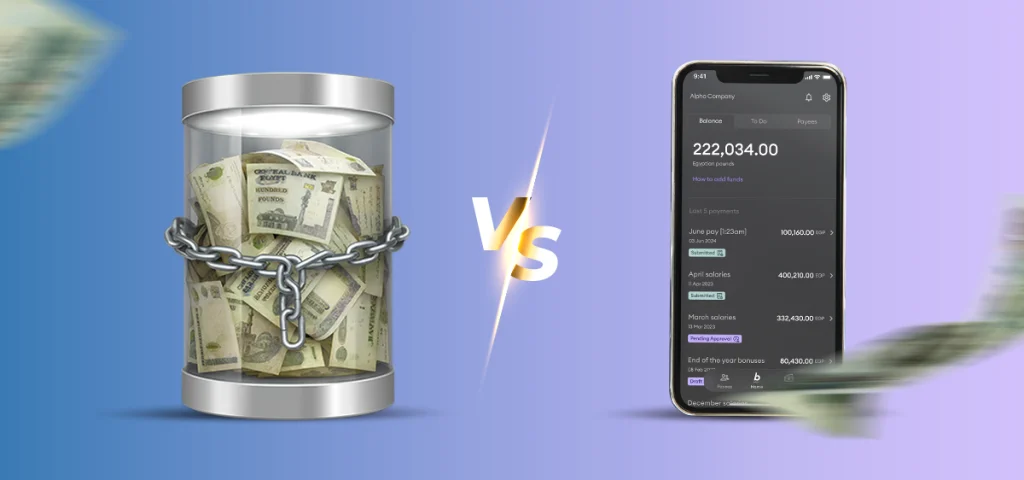
Organizing payroll digitally can also help finance teams track payments more clearly, review completed transactions, and maintain structured payment records.
That’s where dopay can support businesses.
With dopay’s digital payroll platform, finance and HR teams can manage and distribute employee salaries from one place, track payroll payments, and gain better visibility over salary disbursements.
Of course, digital payroll management won’t directly offset higher borrowing costs.
But having a clearer picture of one of your business’s most important monthly expenses can support better cash flow planning and more informed financial decisions.
 Blog