Guide
Guide

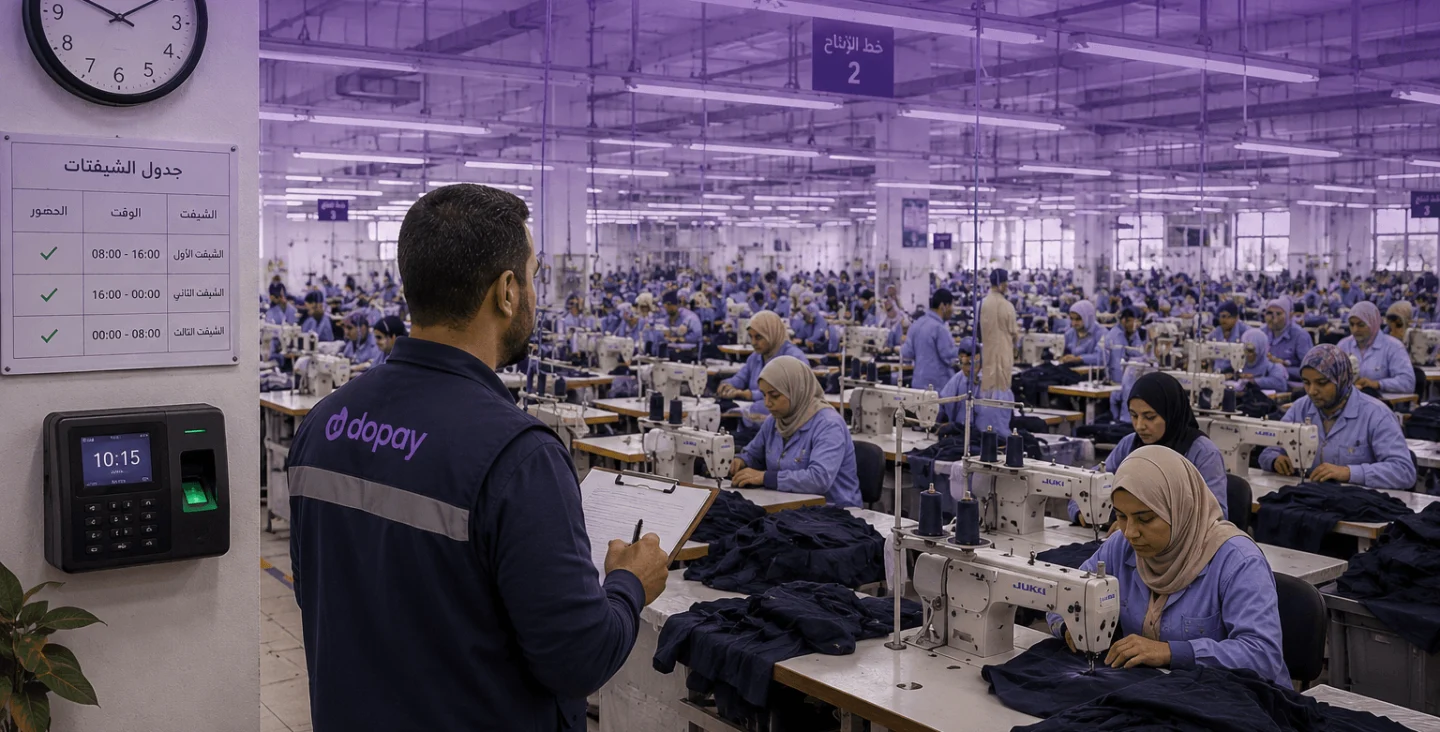
If an employee ever disputes their hours in front of a labor office, the law puts the burden of proof on you, not them. Not on your memory of what happened, not on a verbal understanding — on your records. If you can’t produce documented records and proof, the case is decided against you by default.
That single rule is why working hours, overtime, and shift documentation deserve more attention than most businesses give them. This guide covers what Egypt’s Labor Law No. 14 of 2025 actually requires: the legal limits on working hours, how overtime is triggered and paid, the rules around shift work, what your records need to contain, and how to build a system that protects your business instead of exposing it.
IN SHORT
Egyptian labor law caps standard work at 8 hours a day and 48 hours a week, with overtime paid at 135% (daytime), 170% (night), or 200% (rest days and holidays) of the basic hourly rate. Employers — not employees — carry the burden of proving hours worked, which makes accurate, retained attendance records a legal necessity, not an administrative nicety. Records must be kept for a minimum of five years, cover every clock-in, break, and overtime hour, and be presented on demand during a Ministry inspection or labor dispute. Get this wrong and you’re not just risking a fine — you’re conceding the case before it starts.
Legal Working Hour Limits Under Labor Law No. 14 of 2025
Standard working hours
Labor Law No. 14 of 2025 sets the legal maximum at 8 hours a day and 48 hours a week, typically across a six-day work week. These limits exclude breaks; the 8 hours is working time, not time on-site. Most professional roles in practice run a five-day, 40-hour week by agreement, but the statutory ceiling everyone is measured against is 8 and 48.
Break requirements are straightforward but easy to get wrong in practice: employees are entitled to a minimum one-hour break on any workday of six hours or more, and that break doesn’t count as working time. It can be split — 30 minutes plus 30 minutes, for example — but it has to fall roughly in the middle of the day, not tacked onto the start or end of the shift where it functions as a shorter day in disguise.
Weekly rest is a separate entitlement: a minimum of 24 consecutive hours, usually Friday, though it can shift to Saturday where the business genuinely requires it. The key word is consecutive — splitting the rest day into scattered hours across the week doesn’t meet the requirement.
Ramadan special provisions
During Ramadan, Muslim employees work a maximum of 6 hours a day, with no reduction in salary. Non-Muslim employees can continue on normal hours, or reduce voluntarily — the choice belongs to them, not the employer. Overtime for Muslim employees during Ramadan is calculated against the reduced six-hour baseline, not the usual eight, which matters when you’re running payroll during the month.
Special categories
Women cannot be scheduled to work between 7:00 PM and 7:00 AM, except where the employer has secured Ministry of Labour approval for a specific exception. Maternity leave is 90 days, paid, and nursing mothers are entitled to two paid nursing breaks a day for up to two years after giving birth.
Minors under 18 are capped at six hours a day, barred from night work entirely (7:00 PM–7:00 AM), guaranteed mandatory breaks, and — where they’re still in education — entitled to a schedule that accommodates it.
Hazardous work carries its own reductions: 6 to 7 hours a day depending on the risk level of the role, extra compensation on top of the reduced hours, and mandatory health monitoring for anyone in the category.
Overtime Regulations
When overtime applies
Overtime is triggered by either of two conditions: working beyond 8 hours in a single day or beyond 48 hours in a week — whichever threshold is crossed first. Both triggers are independent; an employee who works 9 hours on a Tuesday has earned overtime for that day even if their weekly total stays under 48.
Overtime rates — the part that gets audited
This is the section worth getting exactly right, because it’s also the section labor inspectors check first.
| Overtime type | When it applies | Minimum rate | Example (EGP 25/hr basic) |
| Daytime overtime | 7:00 AM – 10:00 PM, regular working days | 135% | EGP 33.75/hour |
| Nighttime overtime | 10:00 PM – 7:00 AM | 170% | EGP 42.50/hour |
| Weekly rest day / public holiday | Friday or an official holiday | 200% | EGP 50.00/hour |
| Ramadan overtime (Muslim employees) | Beyond the 6-hour Ramadan limit, daytime | 135% | EGP 33.75/hour |
Critical calculation notes:
- Overtime is calculated on basic salary only — allowances, bonuses, and benefits are excluded from the base
- The hourly rate formula is = monthly basic salary ÷ 30 days ÷ 8 hours
- Where more than one premium could apply — night work that also falls on a rest day, for instance — you pay the higher of the two rates, not both stacked together
Overtime limits
The general cap is 2 hours of overtime per day. That can be extended to 3 hours with Ministry approval, and in genuinely exceptional circumstances — emergencies, seasonal harvests, and similar cases — up to 12 hours a day, but only with a formal application to the Ministry justifying the exception. Routine overtime beyond 2 hours without the Ministry’s approval is a compliance gap, not a gray area.
Restrictions apply on top of the general cap: women face limits on overtime, particularly at night; minors are not permitted to work overtime at all; and pregnant employees cannot be scheduled for overtime after their sixth month of pregnancy.
Overtime consent — what each side can and can’t do
Employees can refuse overtime that exceeds the legal limits and cannot be disciplined or terminated for that refusal. Asking someone to work illegal hours and penalizing them for declining is itself a violation. Within the legal limits, though, employers can require reasonable overtime and can discipline an employee who refuses it without cause. What employers cannot do, under any circumstance, is get the rate wrong — the obligation to pay employees correctly holds regardless of how the hours were assigned.
Shift Work Regulations
Types of shift work
Fixed shifts assign an employee permanently to one block — commonly morning (6:00 AM–2:00 PM), afternoon (2:00 PM–10:00 PM), or night (10:00 PM–6:00 AM). Rotating shifts move employees through these blocks on a weekly or monthly cycle, with the schedule shared in advance. Split shifts break the workday into non-consecutive periods — 7:00–11:00 AM then 5:00–9:00 PM, for example — with the unpaid gap in between; the total time actually worked still can’t exceed the standard 8-hour limit.
What good shift scheduling looks like
Scheduling:
☐ Schedules provided at least 24 hours in advance
☐ Changes to a published schedule require employee consent
☐ Emergency exceptions are allowed, but must be documented at the time
Shift premiums (market practice, not a legal requirement, but standard enough that skipping them creates a retention problem):
☐ Night shift allowance: commonly 20–30% on top of base pay
☐ Weekend shifts: typically carry extra compensation
☐ Split shifts: often need a premium to remain attractive to staff
Breaks within shifts:
☐ The same 1-hour minimum break applies
☐ Shorter, 6-hour shifts can use a 30-minute break instead
☐ An additional short break is recommended, though not mandated, for night shift workers
Health and safety:
☐ Rotate shifts rather than leaving the same employees on permanent night work
☐ Provide health checks for employees regularly working nights
☐ Ensure adequate lighting and facilities across every shift, not just daytime ones
☐ Arrange transportation for late-night shift employees where public transport isn’t a safe option
Record-Keeping Requirements — This Is the Mandatory Part
What must be recorded, every single day
Daily attendance records need to capture:
☐ Employee name and ID
☐ Date
☐ Clock-in time (actual arrival, not scheduled start)
☐ Clock-out time (actual departure)
☐ Break times
☐ Total hours worked
☐ Overtime hours, if any
☐ Absences or late arrivals
☐ Employee signature (paper records) or digital confirmation (electronic records)
Weekly or monthly summaries should roll this up into: total hours worked, regular hours, overtime hours broken out by type (day / night / weekend), absences, and any taken leave(s).
Acceptable record-keeping methods
Manual sign-in sheets — pre-printed forms, signed in and out, verified by a supervisor, and filed. Low cost and simple to start, but easy to forge, slow to calculate from, and the most time-consuming option to maintain at scale.
Time clocks or punch cards — mechanical or electronic, stamping a physical card that’s filed weekly. Harder to falsify than a sign-in sheet and gives an automatic timestamp, but “buddy punching” (one employee clocking in for another) remains possible, and totals still need manual calculation.
Biometric systems — fingerprint or facial recognition, producing a digital record with automatic calculation. Effectively impossible to fake, accurate, and it integrates directly with payroll. The trade-off is a higher upfront cost.
Digital apps or software — mobile or web-based, with optional GPS verification and real-time tracking. This is the most accurate option available, calculates overtime automatically, and is the only practical choice once you have employees working remotely or across multiple sites.
The law doesn’t mandate a specific method — a compliant sign-in sheet is legally acceptable. What it does require is that whatever method you use captures the required fields accurately and can be presented and submitted on demand.
Retention requirements
Attendance records, overtime records, payroll records, and leave records must all be retained for a minimum of five years — longer is recommended and costs you almost nothing beyond storage. The five-year minimum isn’t an arbitrary number: employees can file claims up to five years after leaving the company, labor court cases can run for years before resolving, Ministry inspections routinely look back across multiple years, and tax and NOSI audits require documentary proof going back that far.
Store records in a secure, locked location, protected from fire and water damage, organized well enough to retrieve a specific employee’s file quickly, and backed up digitally — a filing cabinet with no digital backup is one flood away from an unwinnable dispute.
What happens when a dispute reaches a labor office
The burden of proof sits with the employer, not the employee. If you cannot demonstrate how many hours someone worked and that they were paid correctly for those hours, the labor court rules in the employee’s favor by default. Complete, accurate records are your protection. Missing records are, functionally, a guilty plea.
The disputes that come up are predictable: an employee claims they worked 10 hours on a day you have down as 8; that they worked every Friday when your records show only some; that overtime they’re owed was never paid. Your defense in every one of these cases is the same: a signed attendance sheet or digital log showing the actual hours, time clock data, overtime authorization forms, and pay slips that show overtime paid and broken out by rate.
Without those records, the court believes the employee’s account, you pay the amount claimed plus applicable penalties, and you cover the legal costs of losing a case you may not have actually been wrong about — you simply couldn’t prove it.
Overtime Calculation Examples
The formula stays constant: hourly rate = monthly basic salary ÷ 30 ÷ 8, then multiply by the applicable overtime percentage and the number of overtime hours. Four worked examples:
| Scenario | Basic monthly salary | Hourly rate | OT type & rate | OT hours | OT pay |
| Regular day, 2 extra hours | EGP 6,000 | EGP 25.00 | Daytime, 135% | 2 | EGP 67.50 |
| Evening shift, 1 extra hour | EGP 8,000 | EGP 33.33 | Night, 170% | 1 | EGP 56.67 |
| Called in on Friday | EGP 5,000 | EGP 20.83 | Rest day, 200% | 6 | EGP 250.00 |
| Ramadan, beyond 6-hour limit | EGP 7,000 | EGP 29.17 | Ramadan daytime, 135% | 2 | EGP 78.76 |
Notice that the rate itself never changes based on how much someone earns — a junior employee on EGP 5,000 and a senior one on EGP 8,000 both get exactly 135%, 170%, or 200% of their own basic hourly rate. What changes is the hourly figure you’re applying the percentage to. Getting that base number wrong — by including allowances that should be excluded, for instance — throws off every overtime calculation that follows from it.
Compliance Checklist
Daily
☐ Record all employee clock-in/clock-out times
☐ Note any late arrivals or early departures
☐ Document break times
☐ Calculate overtime hours as they occur
☐ Get overtime pre-approved by a manager, in writing
Weekly
☐ Verify weekly hour totals don’t exceed 48
☐ Confirm the weekly rest day was actually provided
☐ Calculate overtime by type — day, night, weekend
☐ Submit overtime figures for payroll processing
Monthly
☐ Reconcile attendance records against payroll
☐ Verify overtime rates were applied correctly
☐ Confirm pay slips show a clear overtime breakdown
☐ File attendance records securely
☐ Update overtime accruals where relevant
Annually
☐ Review the full year’s overtime records
☐ Confirm retention compliance (5+ years, all categories)
☐ Audit a sample of calculations for accuracy
☐ Update internal policies for any changes to the law
☐ Train managers on current requirements
Red flags worth investigating immediately:
⚠ Overtime regularly exceeding 2 hours a day without Ministry approval
⚠ Overtime being worked with no written authorization on file
⚠ Employees working seven days a week without a rest day
⚠ Night work being paid at the standard rate instead of 170%
⚠ Gaps or missing periods in attendance records
⚠ Women scheduled for night shifts without documented Ministry approval
⚠ Minors recorded as working any overtime at all
Common Violations and Penalties
Violation #1: Not paying overtime. This is the most direct violation and the easiest for an inspector or a former employee to prove once attendance records exist. Liability includes the unpaid amount, retroactive penalties, and — if it’s a pattern rather than a one-off — increased scrutiny of your broader payroll practices.
Violation #2: Applying the wrong overtime rate. Paying 135% when 170% or 200% applied is still a violation, even if some overtime was paid. Inspectors and courts calculate the shortfall, not just whether a payment was made at all.
Violation #3: No attendance records. On its own, this converts almost any wage dispute into an automatic loss, because there’s nothing to counter the employee’s version of events with.
Violation #4: Exceeding working hour limits. Running employees past 8 hours a day or 48 hours a week without treating the excess as overtime — or without valid Ministry-approved exceptions — is a standalone violation independent of whether the extra time was paid at all.
Violation #5: Illegal night work. Scheduling women or minors for night hours without the required approval (or, for minors, under any circumstances) carries its own penalties on top of any wage-related findings.
In practice, violations rarely arrive alone. A company with weak record-keeping tends to also be miscalculating rates and exceeding hour limits, because the same gap in discipline produces all three. Fixing the record-keeping foundation tends to surface — and fix — the other issues at the same time.
Conclusion
Working hours and overtime look like a straightforward compliance topic until the day an employee disputes their pay at a labor office — and then the only thing that matters is whether your records can speak for you. The rates aren’t complicated (135%, 170%, 200%, calculated on basic salary), and the record-keeping requirements aren’t either: capture the real hours every day, retain them for at least five years, and be ready to produce them without scrambling.
The businesses that get burned aren’t usually the ones deliberately underpaying overtime. They’re the ones who never built a habit of documenting it — and found out what that costs only when it was too late to fix. Build the habit now while it’s still just good practice and not damage control.