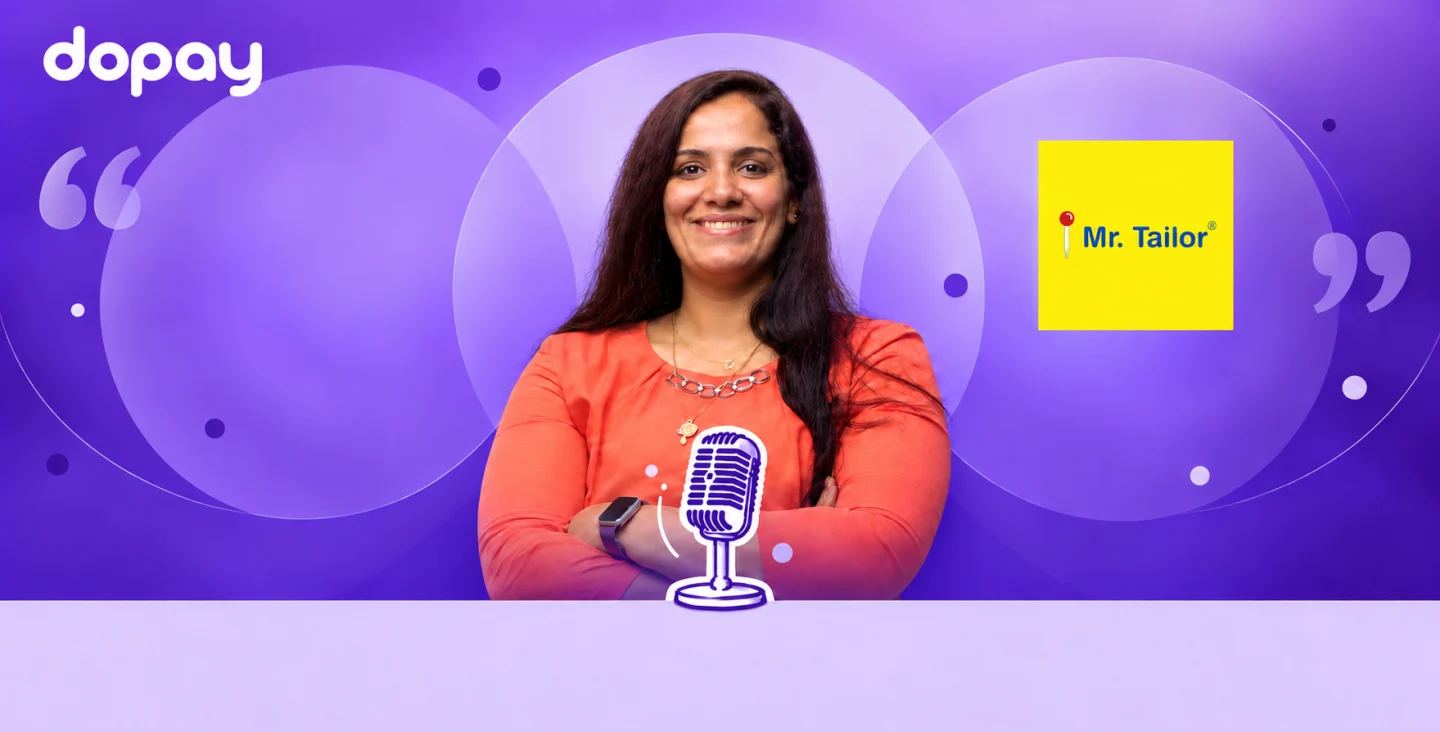
Maria William on automation, fair incentives, and why every new hire at Mr. Tailor gets a dopay card.
Mr. Tailor has grown into an international brand, with a branch in the US. One of the people behind that growth is Maria William, Head of HR, who brings consultancy experience in improving how businesses operate and who led the company’s move to a paperless HR system. We asked her what it takes to grow without losing control.
Know your market, and have a plan B
For Maria, growth starts with research.
“The main challenge is knowing exactly what kind of market you’re entering, and studying that market well. You need to know where you’re headed. Is the market growing? How much market share do you actually have? Where do you want to go?”
Maria William, Head of HR, Mr. Tailor
Her checklist for business owners: set your mission, vision, and goals clearly from day one, build a risk mitigation plan that covers internal and external risks, hire people with real market experience, and put a clear organizational structure and delegation strategy in place. In retail, add clear rules for customer-facing teams, to protect the customer experience as well as the rights of customers and the company.
Her most striking advice is financial: keep another source of income.
“Don’t rely on just this one business… you need another source of income to fall back on. Some months, there just isn’t much work… but that doesn’t mean I’ll lay off employees… I’m not going to downsize or pay people half their salary… at the end of the day, I have a contract with you… so I have to honor that.”
Maria William, Head of HR, Mr. Tailor
Why automation was non-negotiable
As the company grew, manual payroll stopped making sense. Mr. Tailor now runs automated, fingerprint-based attendance, with security cameras as a backup. Salaries are calculated from the clock-in and clock-out record, and if an employee disputes it, the area manager (not HR) reviews the footage.
“We set up an automated system for clocking in and out, so we don’t end up with calculation mistakes due to human error. For each employee, it’s their clock-in and clock-out record that determines and calculates their salary.”
Maria William, Head of HR, Mr. Tailor
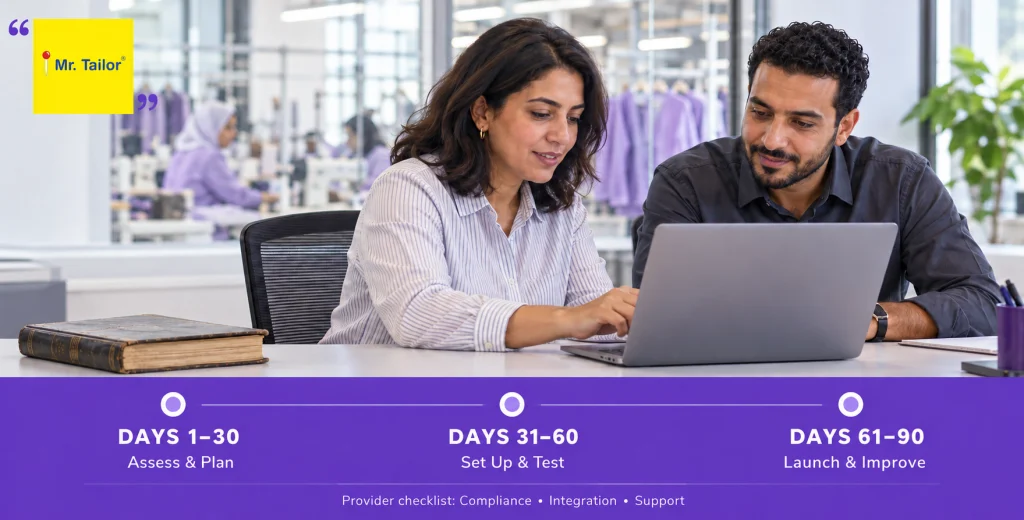
Getting there took a plan. In the first phase, the team customized an HR system through an agency based outside Egypt, ran a trial period, and held several tutorial rounds so employees could move smoothly from the old manual system to the new digital one.
Her advice is to keep a human check in the loop.
“Even if I also work manually alongside the system, that combination gives me 100% accurate results… It’s best to periodically pick something at random and review it, just to make sure the system is working correctly.”
Maria William, Head of HR, Mr. Tailor
And the personal payoff? “I felt it wasn’t right to keep working manually while the company kept growing in size,” she says. Automation made adding salary impacts (additional compensation items) far easier as the business grew.
Rewarding the people who show up
Salaries at Mr. Tailor are fixed monthly, not tied to workload. On top of that sit incentives that reward commitment:
“I set up an attendance certificate of appreciation… anyone who’s never even a minute late gets a bonus based on their clock-in record.”
Maria William, Head of HR, Mr. Tailor
There are also bonuses for voluntary overtime when a deadline demands it. Maria remembers opening the camera feed at 2 a.m., finding an employee still at the branch without being asked, and awarding the bonus right then and there.
The culture goes beyond bonuses. Managers stay close to their teams, communicate with them directly, and are held accountable for raising their teams’ needs early. Managers are trained under the company’s supervision, and so are customer-facing employees. The team upgraded uniforms to a more comfortable, upscale fabric, and when a group of young employees wanted to play football together, Maria organized a full sports day at a big club, with transport included. Women employees at Mr. Tailor branches choose between 10 a.m. to 7 p.m. and 11 a.m. to 8 p.m. shifts.
The company’s owner, Dr. Osama, backs it all up: 100% medical coverage, plus emergency support and loans for any crises, including financial support for an employee’s family in case of death.
Everyone gets a dopay card
Mr. Tailor pays through dopay only. “Every new hire gets their own dopay card as soon as possible,” Maria says.
“You have several advantages, not just one. The first is that whenever I need my account manager, I can reach her even late at night, since I work late myself, and even on holidays… I never get an unanswered call or an automated message saying it’s a day off.”
“The second advantage is that I can make a transaction at any time, whether it’s at night or at noon, unlike banks, where I’d have to prepare a sheet, upload it to the system, and wait for approvals. It used to be a real hassle.”
Maria William, Head of HR, Mr. Tailor
It matters to employees too. Even on leave, they don’t need to visit an office or branch to collect pay, and she can send money anytime, anywhere if something comes up. During Eid, she pays out every salary through dopay.
Key takeaways
- Automate attendance and payroll before growth forces your hand, and run a trial phase with employee training.
- Keep spot checks alongside the system to confirm it works.
- Reward punctuality and initiative, and keep managers close to their teams.
- Instant, anytime payments mean a better experience for employees on leave and during Eid or any official holiday.
 Guide