Guide
Guide


A strong incentive system drives performance. A poorly designed one wastes money and creates tax headaches.
For many businesses in Egypt, employee bonuses are a key part of their pay strategy. They help reward good work, keep valuable employees, and encourage teams to reach their goals.
But managing bonuses takes more than deciding how much to pay. Employers also need to understand bonus taxation rules in Egypt, social insurance contributions, and their legal duties.
Without clear rules, incentive programs can lead to payroll errors, unexpected costs, and employee disputes.
In Short
- Bonus types: Employers can offer performance bonuses, commissions, profit sharing, retention payments, and other rewards.
- Income tax: Most employment bonuses are taxable. Some legally distributed employee profit shares may qualify for an exemption.
- Social insurance: Some bonus payments form part of the insurable wage, subject to legal rules and contribution limits.
- Employment contracts: Regular or guaranteed bonuses can create legal obligations for employers.
- Payroll management: Every payment should be recorded, reviewed, and processed with the right deductions.
Types of Bonuses and Incentives in Egypt
Not every bonus serves the same purpose. Some reward individual results. Others encourage teamwork, support retention, or recognize a major achievement.
The right choice depends on what your company wants to achieve.
1. Performance Bonuses
A performance bonus rewards employees for meeting specific targets.
These targets, often called key performance indicators (KPIs), can include sales growth, customer satisfaction, production output, or work quality.
For example, a factory may offer workers a quarterly bonus for meeting production targets while keeping defects below an agreed level.
A good performance bonus that Egyptian employers introduce should have clear targets that employees can influence.
2. Annual Bonuses
Annual bonuses are usually paid at the end of the year or after an annual performance review.
Some companies offer a 13th-month payment, while others link annual bonuses to company results.
These payments are not automatically required for every private-sector employee. Their legal status depends on the contract, company policy, applicable agreements, and established practice.
3. Sales Commissions
Sales commissions reward employees based on sales results.
A salesperson might earn 2% of eligible sales or receive a fixed amount after reaching a monthly target.
Commission plans should define when a sale qualifies and how canceled or refunded sales affect payment.
4. Profit-Sharing Bonuses
Profit sharing gives employees a portion of the company’s profits.
For example, a business may allocate part of its annual profits to eligible staff.
It is important to distinguish legally required employee profit distributions from voluntary bonuses linked to profitability. Different legal and tax rules may apply.
5. Spot Bonuses and Awards
Spot bonuses recognize achievements as they happen.
A manager might reward an employee who solves an urgent problem or delivers outstanding customer service.
These bonuses are often smaller and less frequent than annual rewards.
6. Retention Bonuses
Retention bonuses encourage key employees to stay with a company for an agreed period.
For example, a company may promise a bonus after an employee completes another 12 months of service.
They can be useful during periods of change or when retaining specialized employees is important.
7. Signing Bonuses
Signing bonuses are offered to new employees when they join a company.
Employers often use them to attract experienced candidates or fill hard-to-hire roles.
The agreement should explain when the bonus is paid and what happens if the employee leaves shortly after joining.
8. Project Completion Bonuses
Project bonuses reward employees for meeting specific milestones.
A construction company, for instance, might reward its team for delivering a project on time and within budget.
These bonuses work best when deadlines, quality standards, and responsibilities are agreed upon in advance.
Bonus Types Compared
| Bonus Type | Main Purpose | Best Time to Use |
| Performance Bonus | Improve individual or team results | Monthly or quarterly reviews |
| Annual Bonus | Reward yearly performance | Year-end |
| Sales Commission | Encourage sales growth | Monthly or quarterly |
| Profit Sharing | Link rewards to business results | After profit approval |
| Spot Bonus | Recognize exceptional work | When achievements occur |
| Retention Bonus | Keep valuable employees | During key retention periods |
| Signing Bonus | Attract new talent | Recruitment |
| Project Bonus | Reward milestone completion | End of a project or phase |
The most effective bonus structures Egypt businesses adopt often combine more than one incentive type.
Tax Treatment of Bonuses and Incentives in Egypt
Before introducing any bonus plan, employers need to understand how it affects income tax.
Under Egypt’s Income Tax Law No. 91 of 2005, as amended, employment income generally includes salaries, commissions, incentives, bonuses, and other payments received in return for work.
This means most employee bonuses are subject to income tax.
However, there is an important exception: employee profit shares distributed according to applicable law may qualify for an income tax exemption. Employers should confirm the legal nature of each payment.
How Is Bonus Tax Calculated in Egypt?
Egypt uses a progressive income tax system.
This means different portions of an employee’s annual taxable income are taxed at different rates.
For 2026, the standard tax brackets are:
| Annual Taxable Income (EGP) | Tax Rate |
| Up to 40,000 | 0% |
| Over 40,000 to 55,000 | 10% |
| Over 55,000 to 70,000 | 15% |
| Over 70,000 to 200,000 | 20% |
| Over 200,000 to 400,000 | 22.5% |
| Over 400,000 to 1,200,000 | 25% |
| Above 1,200,000 | 27.5% |
Employees also benefit from an annual EGP 20,000 personal salary tax exemption, alongside other deductions allowed by law.
These are the standard published rates. Additional rules can affect the application of lower brackets at higher income levels, so employers should use the Egyptian Tax Authority’s current payroll calculation rules.
Example: How a Bonus Affects Income Tax
Imagine an employee has annual taxable income of EGP 190,000 before receiving a bonus.
The company awards an additional EGP 30,000 performance bonus.
Their annual taxable income now reaches EGP 220,000.
Here is how the extra income affects tax:
| Bonus Portion | Applicable Rate | Additional Tax |
| First EGP 10,000 | 20% | EGP 2,000 |
| Remaining EGP 20,000 | 22.5% | EGP 4,500 |
| Total | – | EGP 6,500 |
In this simplified example, the employee receives EGP 23,500 after the additional income tax.
The example assumes taxable income has already been calculated after eligible exemptions and deductions. Actual payroll results may differ.
Employer Responsibilities for Bonus Taxation
Employers are generally responsible for calculating, withholding, and remitting the correct salary tax.
HR and Finance teams should:
- Include taxable bonuses in employee payroll records.
- Apply current tax brackets and eligible deductions.
- Check withholding when large bonuses are paid.
- Maintain supporting records for each payment.
- Complete the required annual payroll tax reconciliation.
Employers can refer to the Egyptian Tax Authority’s payroll tax forms for current calculation and reconciliation guidance.
Accurate records make bonus taxation in Egypt requirements easier to manage and help reduce errors during year-end reviews.
Bonuses and Social Insurance in Egypt
Income tax is only one part of bonus compliance.
Employers must also determine how employee incentives affect social insurance contributions.
Under Social Insurance and Pensions Law No. 148 of 2019, contributions are based on the employee’s legally determined insurable wage.
This makes the treatment of variable pay that Egyptian employers offer an important payroll consideration.
Are Bonuses Subject to Social Insurance?
Some bonuses and incentive payments may form part of the insurable wage. However, social insurance treatment depends on the nature of the payment and the rules used to determine the employee’s insurable earnings.
A regular commission included in an employee’s wage package may be treated differently from an exceptional, one-time award.
For this reason, businesses should not assume that every bonus is automatically included or excluded.
Social Insurance Contribution Rates in 2026
For employees covered by the standard contribution structure, the commonly applicable rates are:
| Contributor | Contribution Rate |
| Employee | 11% |
| Employer | 18.75% |
These percentages apply to the relevant insurable wage, not automatically to every pound of gross earnings.
Other contributions or special rules may apply depending on the employment category.
How Does Variable Pay Affect Social Insurance?
Regular commissions, incentives, and other payments may need to be considered when determining insurable earnings.
Employers should assess the payment’s legal classification, frequency, and treatment under the applicable regulations.
Some variable-pay calculations may require reviewing earnings over a prior period. However, a simple 12-month average should not be assumed to apply to every bonus.
Correct reporting matters because insurable earnings can affect future pension entitlements and other social insurance benefits.
Reporting Bonuses and Wage Changes
Employers must keep accurate wage and employee records with the National Organization for Social Insurance.
Form 2 is used to report changes to insured employees’ information and wages, including the relevant annual update.
Companies should review whether changes to compensation affect reported insurable wages and complete the necessary filings.
Understanding social insurance rules on bonuses in Egypt helps businesses avoid reporting errors and unexpected contribution costs.
Designing an Effective and Compliant Incentive System
A good bonus plan should reward strong performance without putting pressure on the company’s budget.
It should also be easy for employees to understand.
Here are seven steps for designing an incentive system that Egyptian businesses can apply.
Step 1: Define Clear Objectives
Start by deciding what the incentive should achieve.
Do you want to increase sales, improve production quality, reduce customer complaints, or encourage employee retention?
Choose one or two main goals for each incentive.
For example, a logistics company might introduce a quarterly bonus to improve on-time delivery rates.
Step 2: Set Realistic Performance Targets
Employees should know exactly what they need to achieve.
Targets should be measurable, realistic, and linked to responsibilities within the employee’s control.
For example, a sales target of EGP 500,000 per quarter gives employees a clear result to work toward.
Avoid setting targets that depend mainly on factors employees cannot influence. Review past performance before deciding what counts as a realistic target.
Step 3: Set Your Bonus Budget
Finance teams should calculate how much the company can afford before announcing any rewards.
Consider:
- Expected number of eligible employees.
- Maximum possible bonus payments.
- Employer social insurance costs, where applicable.
- Payroll processing and administrative costs.
- The impact on monthly and annual cash flow.
For example, if 50 employees can each earn a quarterly bonus of EGP 3,000, the maximum gross bonus pool would be EGP 150,000.
A fixed budget helps control costs and prevents the incentive program from becoming an unexpected financial burden.
Step 4: Choose a Payout Structure
Different targets may need different payout methods.
The three most common options are:
Linear payout: Employees earn rewards in proportion to their results.
Example: An employee who achieves 80% of their target receives 80% of the eligible bonus.
Tiered payout: Rewards increase when employees reach higher performance levels.
Example: A salesperson receives EGP 2,000 for reaching 100% of their target and EGP 3,000 for reaching 120%.
Threshold payout: Employees must reach a minimum result before earning a bonus.
Example: A production team receives a bonus only when output reaches at least 95% of its target.
Choose the approach that best supports your business goals.
Step 5: Put the Rules in Writing
Document all important details in a written bonus policy.
The policy should explain eligibility, performance targets, payment dates, approval steps, and what happens when employees join or leave during a bonus period.
Legal and Finance teams should review the policy before it is introduced.
Step 6: Communicate the Plan Clearly
Employees should understand how bonuses work before the performance period begins.
Explain how targets are measured, when results are reviewed, and how payments are calculated.
Clear communication builds trust and reduces disputes.
Step 7: Review and Improve the System
An incentive program should change as the business grows.
Review performance, employee feedback, and actual bonus costs at regular intervals.
Ask whether the program is improving the results it was designed to support.
Make future changes through a clear process that respects existing contractual rights.
The best performance bonus design in Egypt encourages results while keeping costs and expectations under control.
Bonuses in Employment Contracts
One of the most important parts of bonus structures that Egyptian employers need to consider is how incentives are described in employment contracts.
Under Egyptian Labor Law No. 14 of 2025, wages include both basic and variable pay. The law recognizes commissions, bonuses, grants, allowances, and other forms of payment linked to employment.
This means bonus wording can affect an employee’s legal rights.
Discretionary vs. Contractual Bonuses
A contractual bonus is one the employer has agreed to pay when certain conditions are met.
For example:
“Employees will receive an annual bonus equal to one month’s basic salary, subject to the conditions stated in this agreement.”
This wording may create a contractual obligation.
A discretionary bonus gives the employer more flexibility.
For example:
“The company may award an annual performance bonus based on individual results and business performance.”
However, the word “may” does not automatically remove every legal obligation.
The full contract, company policy, and established practice also matter.
Can Regular Bonuses Become an Employee Right?
In some cases, yes.
If a company pays the same bonus regularly over several years, employees may come to expect it as part of their compensation.
Egyptian labor law recognizes the importance of established workplace practices when determining certain wage entitlements. That’s why employers should be careful when describing bonuses as discretionary while paying them consistently without clear conditions.
Can Employers Change a Bonus Structure?
Changes depend on the nature of the bonus.
An employer generally cannot remove an established contractual entitlement simply by issuing a new policy.
Discretionary bonus arrangements may allow greater flexibility, provided changes follow the law and do not remove rights employees have already earned.
It is best to review proposed changes with legal advisers and communicate them before the next performance period.
Also get to know: How Exactly Does Your Payroll Consume Your Time and Money?
Managing Bonuses in Payroll
Once a company approves its incentive program, the next step is making sure payments are processed correctly.
This can become challenging when employees receive different bonus amounts each month.
Strong payroll processes help businesses manage incentive pay requirements in Egypt with fewer manual steps.
Track Bonuses Separately From Basic Salary
Payroll records should distinguish basic salary from commissions, overtime, bonuses, and other variable payments.
This makes it easier to understand total employee compensation and review payment costs.
For example, an employee’s monthly pay record might include:
| Payment Component | Amount |
| Basic Salary | EGP 12,000 |
| Sales Commission | EGP 2,000 |
| Performance Bonus | EGP 1,500 |
| Total Gross Earnings | EGP 15,500 |
Tax, social insurance, and other applicable deductions should then be calculated based on the correct legal treatment of each component.
Review Tax and Social Insurance Calculations
Payroll teams should use up-to-date calculation tools or software to handle applicable deductions.
This is especially important when large or irregular bonuses are paid.
Keep a record of the calculations and approvals used for every payment.
Plan Bonus Payment Dates
A bonus that is approved late can delay payroll preparation.
Set clear deadlines for managers to submit results and for Finance to approve payments.
For larger teams, batch processing can help reduce repetitive payment work.
Keep Clear Payroll Reports
Monthly reports should show salary payments, bonus amounts, commissions, and other approved earnings.
These records support year-end tax reconciliation, cost reviews, and internal audits.
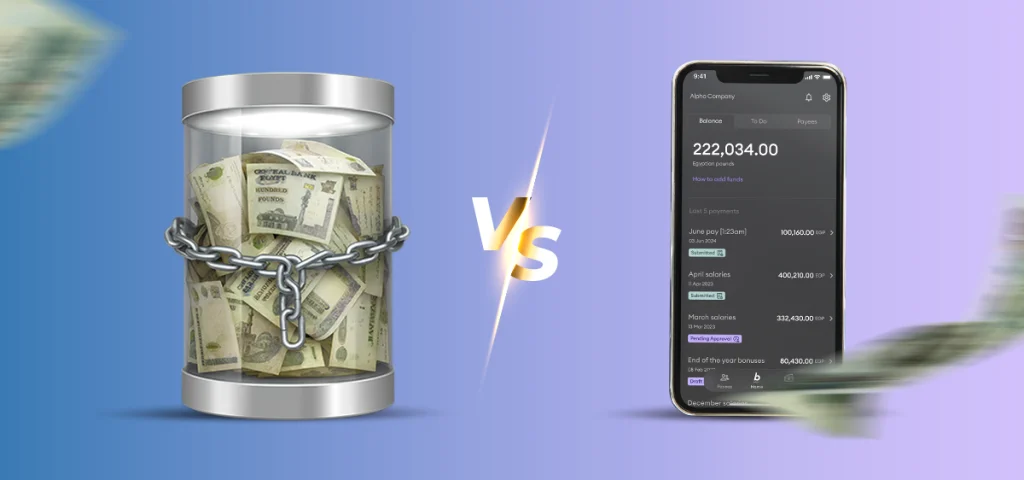
Simplify Bonus Payments With dopay
A digital payroll solution can help companies manage the payment side of their incentive programs.
With dopay’s payroll solution, businesses can manage employee salary payments through one platform, track transfers, and access payment reports.
HR and Finance teams can prepare approved net payments after completing the required tax and social insurance calculations through their payroll process.
This helps reduce manual payment work and gives businesses clearer visibility over salary and bonus transfers.
 Blog
Blog