Blog
Blog

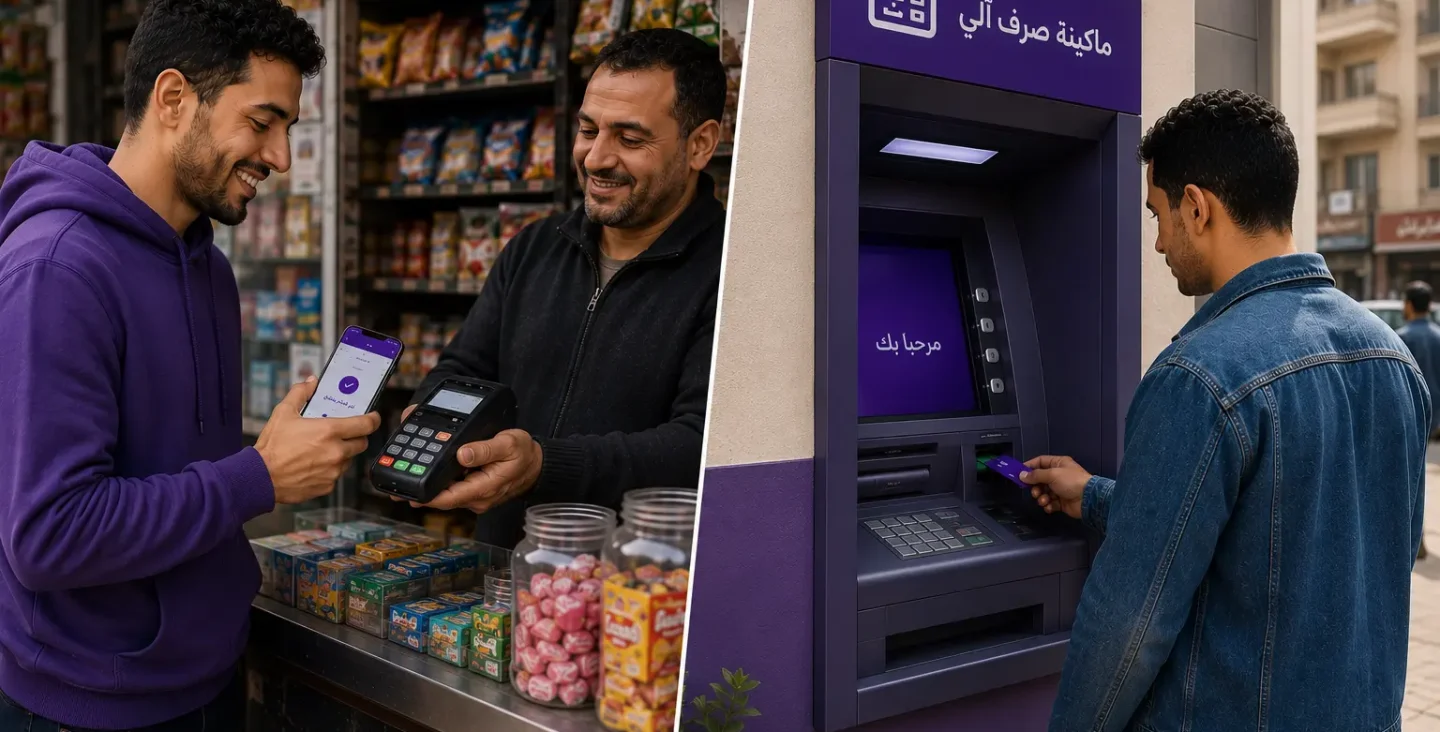
Mobile wallets and payroll cards both move salaries to frontline workers in Egypt, and neither one is the right answer for every workforce. Wallets are usually easier on the worker who already has a mobile wallet. Whereas, cards usually give the employer a cleaner audit trail and higher monthly limits.
We’ve investigated where each option actually fits across Egyptian SMEs, factories, retail floors, construction sites, and offices. The honest answer is rarely “always one or the other.”
IN SHORT
Mobile wallets in Egypt suit smaller payouts, smartphone-first workers, and teams already familiar with Vodafone Cash, Etisalat Cash, Orange Money, or Instapay. Payroll cards suit higher salaries, broader ATM access, mixed digital-and-cash spending, and audit-heavy employers. A hybrid often wins. The honest tradeoffs sit across coverage, KYC, limits, employer audit trail, and worker familiarity by sector.
What is the actual digital-payout landscape for workers in Egypt?
Egyptian frontline payroll today moves through three channels: cash, mobile wallets such as Vodafone Cash and Instapay, and payroll cards on the Meeza network. Cash is still common at smaller SMEs. The two digital options sit on different licensing tiers, different limits, and different acceptance footprints.
Egypt’s financial-inclusion picture has shifted fast over the last five years. According to the World Bank Global Findex Database, in 2021 around 27% of Egyptian adults aged 15 and over held an account at a financial institution. More recent figures from the Central Bank of Egypt show financial inclusion climbing toward 71% when mobile wallets are counted alongside bank accounts.
Mobile-wallet adoption has been the driver of that gap. CBE figures place active mobile wallet users in the tens of millions, with monthly transaction volumes that have grown severalfold since 2020. Instapay, the National Bank of Egypt-led instant payment network, has added a second layer on top of bank accounts. GSMA Mobile Economy reporting on MENA frames Egypt as one of the region’s most active mobile money markets.
For an SME owner or an HR Manager choosing a payout method, the question is rarely “wallet or card in the abstract.” It is “what fits this team, this salary band, this audit need, and this monthly cycle.” Across the businesses that have partnered with dopay in retail, manufacturing, hospitality, and construction, the answer often combines both.
How do mobile wallets work for paying salaries in Egypt?
Mobile wallets in Egypt are licensed under CBE rules and tied to the user’s national ID and phone number. Vodafone Cash, Etisalat Cash, Orange Money, and bank-issued wallets sit at the same tier. Instapay is a separate instant payment layer that sits on top of a bank account, not a standalone wallet.
A mobile wallet in Egypt is a digital account opened against a national ID and a SIM card. KYC happens in the wallet app or at an agent and is generally lighter than full bank-account KYC. Wallet balances sit at a regulated cap. CBE’s standard wallet tier allows monthly transaction caps that suit small-to-mid frontline salaries but bind tightly once monthly inflows grow past mid-skilled wage levels.
Acceptance is where wallets shine. Cash-out at agent points is dense in urban Egypt and improving in second-tier cities; person-to-person transfers between wallets on the same network are instant and low-cost, and merchant QR codes have spread across small retail, transit, and delivery.
The worker who already uses Vodafone Cash for top-ups and bills can receive their salary into the same balance, with no new app to learn.
The structural limits show up on the employer side. Bulk disbursement to a mixed wallet portfolio means uploading the right phone number and the right wallet provider for each employee, then reconciling against three or four different provider statements.
International Labour Organization data on Egypt indicates that informal employment has long sat above 60% of non-agricultural employment, which means the same workforce often holds a wallet tied to a SIM the employer never sees. If the SIM changes, the salary route changes.
Wallets usually work best where salaries are small, smartphones are universal, and the workforce is mostly stable. They get harder when the salary band rises, the team rotates, or the auditor asks for one register.
How do payroll cards work for salary disbursement?
A payroll card in Egypt is a prepaid or debit card issued under CBE rules and typically routed on the Meeza domestic network, the Mastercard or Visa international networks, or both. Salary lands on the card, the worker withdraws or spends, and the employer sees one disbursement row per employee per cycle.
A payroll card sits on a fuller KYC tier than a basic wallet, which lifts monthly limits and broadens acceptance. The card works at every ATM in Egypt and at most POS terminals, including supermarkets, fuel stations, pharmacies, and a lot more. The dopay card currently runs on Mastercard’s network, which makes acceptance functionally universal in-country and travel-ready abroad.
For the employer, the audit trail is the headline difference. For instance, the bulk salary file uploaded into dopay for Business produces one timestamped disbursement row per employee, reconcilable line-by-line against the bank statement. Meeza network documentation and CBE payroll guidance both lean toward this single-channel model for SMEs that want clean evidence on demand.
There’s a real onboarding cost for workers who’ve never held a card. Activation, PIN choice, first ATM use, and the first POS transaction are new motions. Talking to HR managers in factories and on construction sites every week, the request that comes up most is help with that first month, not with the technology after. Our on-the-ground logistics teams handle card production and delivery, and our 24/7 customer care teams can answer activation questions in Arabic and English.
Mobile wallets vs payroll cards in Egypt: Side-by-side comparison
Wallets win on worker familiarity, smartphone-first onboarding, and small recurring payouts. Cards win on monthly limits, ATM access, POS acceptance, bulk-disbursement simplicity, and audit trail.
The comparison below puts the two side-by-side across the seven points SME owners and HR managers ask about most.
Take a look at the following and you be the judge: which row matters most for your workforce this year?
| Point of Comparison | Mobile Wallet | Payroll Card |
| KYC Tier | Light, ID plus SIM, opened in app or at agent |
Fuller KYC, ID verified, in-person activation supported |
| Daily and monthly limits | CBE wallet tier caps, suited to lower salary bands |
Higher limits, fit mid and senior frontline salaries |
| ATM access in Egypt | Cash-out at agent points, ATM access via partner banks only |
Every ATM in Egypt via Meeza, Mastercard, or Visa networks |
| POS and online acceptance | QR-based, growing in small retail and transit |
POS and online checkout |
| Employer audit trail | Split across wallet providers, employer bank, and HR files |
One register, one row per employee, reconcilable to bank statement |
| Bulk-disbursement ease | Per-wallet routing and SIM-change risk |
One upload, one cycle, one settlement file |
| Fees to the worker | Per-agent cash-out fees, low P2P fees |
In-network ATM often free, POS purchases free |
The honest read of the table: wallets are usually easier on the worker who already has one, and cards are usually easier on the employer who needs one register. Neither line is “always better.” The right pick depends on which side of the cycle absorbs the hassle at your operation.